
The Opportunity
Ordinance lookup helps you:- Screen sites without losing the supporting municipal-code sources
- Understand which zones allow your intended use
- Get specific code citations you can reference
- Compare requirements across multiple jurisdictions in one query
Walkthrough: Finding Car Wash Sites
Let’s find parcels where you could build a car wash. This seems simple, but car washes are regulated differently in every municipality—some allow them by-right in commercial zones, others require special exceptions, and some restrict them entirely.Step 1: Write the Research Request
Name the target geography in the request. In this case, the study area spans multiple jurisdictions—Orange County, Orlando, Winter Garden, Ocoee, and Windermere.Step 2: Add the Criteria
We asked:Where can I build a car wash here?A simple question—but answering it requires researching the zoning codes for every municipality in the study area.
Step 3: Watch the Research Happen
Ploti recognizes that the study area spans 6 jurisdictions and researches each one: Ploti:- Identified all municipalities in the study area
- Searched each municipality’s code for car wash regulations
- Found the specific zoning districts where car washes are permitted
- Noted where special exceptions or conditional use permits are required
Step 4: Review the Ordinance Findings
Ploti compiled a comprehensive breakdown:
Notice the nuance: Winter Garden’s C-2 zone requires a special exception per Sec. 118-579, while Orlando’s Activity Center zones allow car washes by-right as “Automotive Services.”
Step 5: Review Results by Municipality
Ploti returns separate result groups for each jurisdiction, making it easy to focus on one municipality or see the complete picture: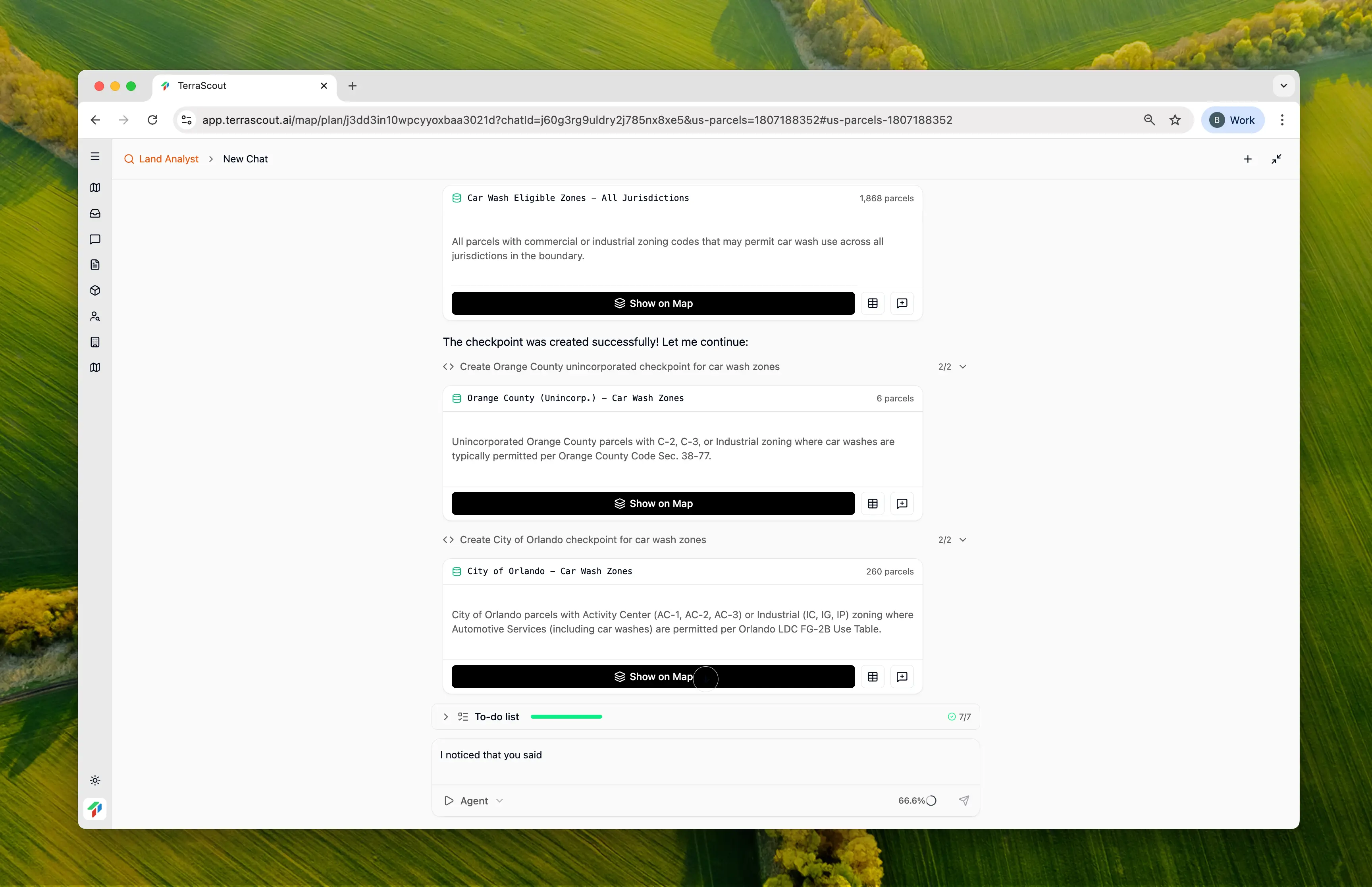
You can toggle between mapped groups to explore opportunities in a specific city or across the entire region.
Step 6: Explore the Results
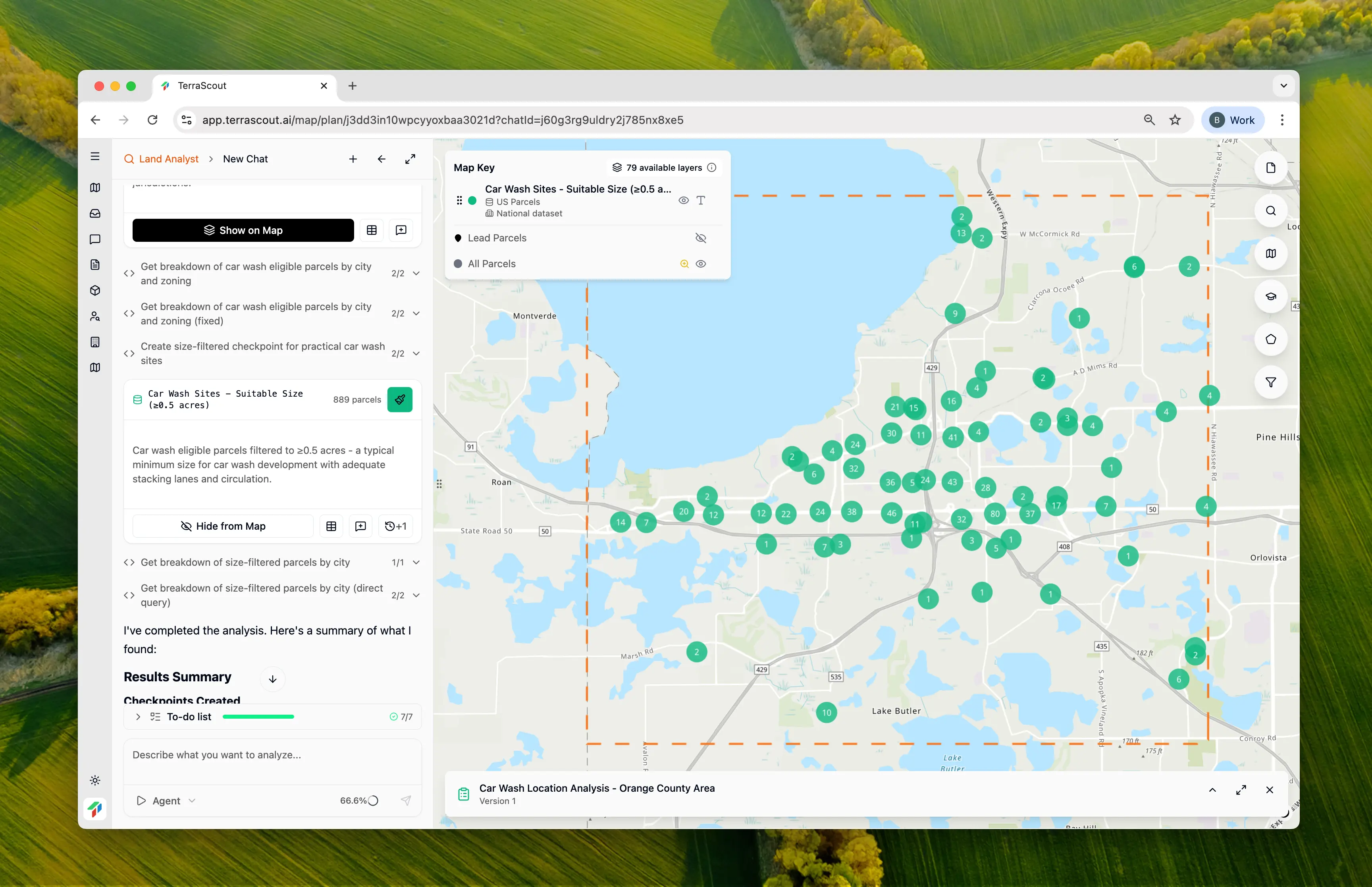
Step 7: Verify with Source Citations
Every finding links back to the actual municipal code: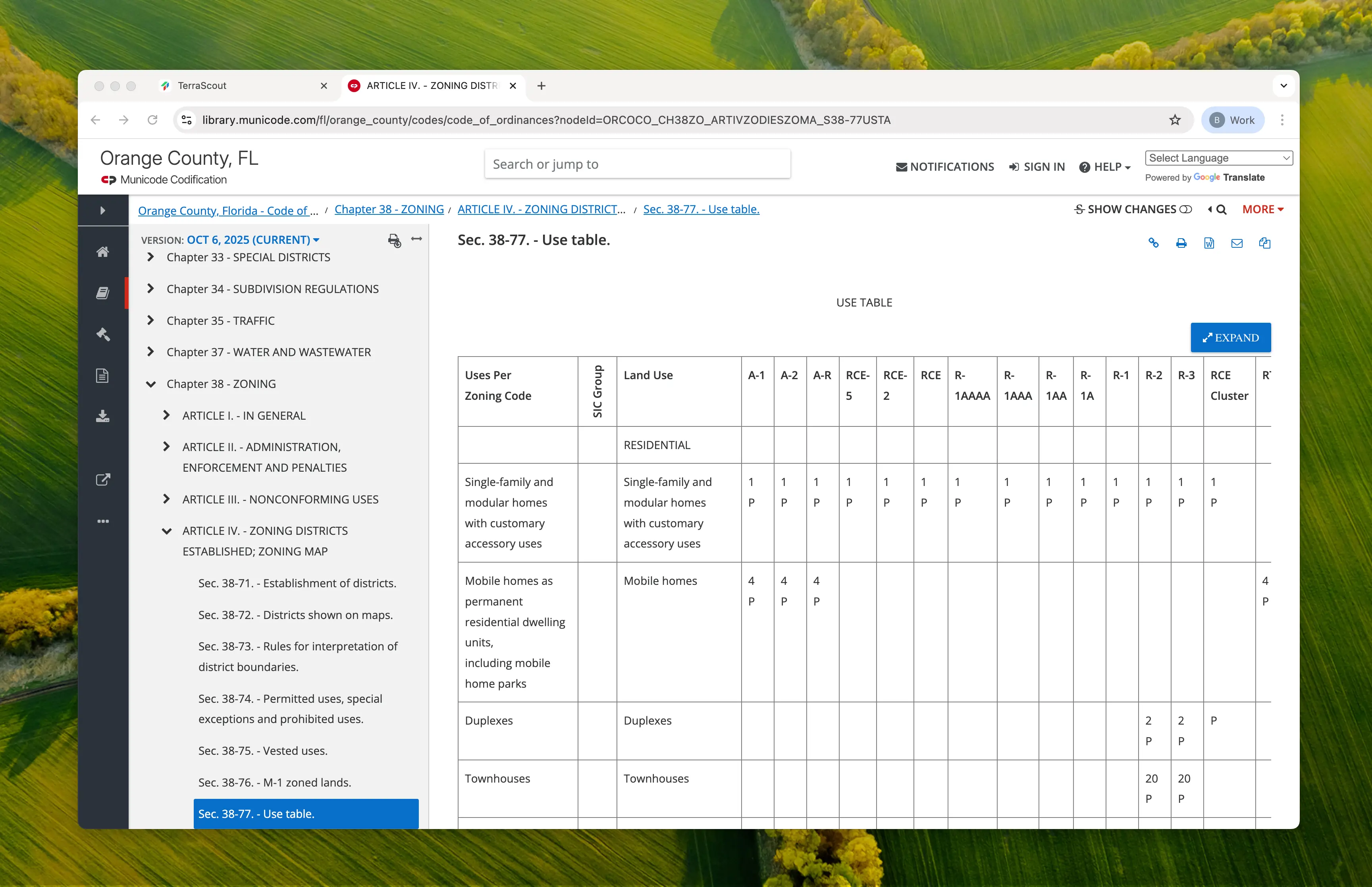
Why This Matters
This isn’t just a database lookup—it’s regulatory intelligence:- Multi-jurisdiction research: One question triggered research across 6 different municipal codes
- Use-specific findings: Not just “what zones exist” but “which zones allow car washes specifically”
- Nuanced understanding: Identified that Winter Garden requires special exceptions while Orlando permits by-right
- Cited sources: Every finding links to the actual ordinance section
- Actionable output: Didn’t just tell you the rules—found the parcels that qualify
Taking It Further
Here’s where Ploti really shines: you’re not done after the initial results. With 889 parcels, you need to narrow down. Just keep talking:Show me ones that are on major roadsNow you’ve filtered to high-visibility sites with traffic counts. Still too many?
Which of these are vacant land over 1 acre?Narrow to shovel-ready sites without demolition costs. Want to prioritize?
Sort by lot size and show me the top 20Each refinement builds on the ordinance research you’ve already done. Ploti remembers that these parcels are in car-wash-permitted zones—you don’t have to re-explain. This is the workflow: Start with regulatory screening, then layer on site criteria through conversation while keeping the original sources attached.
The Manual Workflow This Replaces
Without Ploti, finding these 889 car wash sites would require:- Identifying which municipalities the study area intersects
- Finding the municipal code for each jurisdiction (6 different websites)
- Locating the use table or permitted uses section in each code
- Searching for “car wash,” “automobile service,” or “automotive” in each code
- Cross-referencing permitted zones against a parcel map
- Filtering parcels by zoning code for each municipality
- Compiling results across jurisdictions
- Then starting over each time you want to add another filter
Tips
- Industrial zones often have the fewest restrictions for car wash development—fewer neighbors to object
- Special exception ≠ impossible—it just means a public hearing process; many get approved
- Check for overlay districts—some areas have additional restrictions (historic districts, corridor overlays)
- Verify critical sites with the planning department—codes change and staff interpretations vary
- PUD/Planned Development zones require individual verification—uses are determined by the specific development approval
Other Example Prompts
Specific Zoning Requirements
What are the setbacks, height limits, and lot coverage requirements for C-2 zoning in Winter Garden?Get development standards for a specific zone without searching through the code.
Use Comparison Across Cities
Compare the parking requirements for restaurants in Orlando vs. Winter GardenUnderstand how requirements differ between jurisdictions.
Conditional Use Research
What uses require a special exception in Orange County’s C-1 zone?Identify opportunities that might be overlooked because they require a hearing.
Sign Regulations
What are the sign size and height limits for commercial properties in Ocoee?Sign codes are notoriously complex—let Ploti navigate them for you.